Play-based learning is central to how children learn, grow, and make sense of the world in early childhood. At Mount Peter Early Learning, play is not treated as separate from learning. It is the foundation through which learning happens, supported by thoughtful planning and intentional educator practice.
This guide explains what play-based learning means, how intentional teaching works in everyday moments, and how our approach aligns with Australian national frameworks. It also outlines how learning is documented and measured to ensure children are supported as they progress toward school.
What Play-Based Learning Means Under EYLF 2.0
Play-based learning is often misunderstood as unstructured or hands-off. In practice, it is a carefully planned approach in which educators use play as the context for learning while remaining actively involved in guiding and extending each child’s thinking.
At Mount Peter Early Learning, educators design play experiences with clear learning intentions. They observe closely, listen carefully, and respond in ways that support deeper understanding without taking control of the play itself.
This approach aligns with the Early Years Learning Framework and the updated EYLF 2.0. EYLF 2.0 reinforces the role of intentional teaching, recognising that quality learning occurs when educators make informed decisions about how and when to engage.
Play draws children in. Intentional teaching ensures learning progresses.
How Intentional Teaching Works in Practice
Scaffolding Mathematical Thinking Through Construction Play
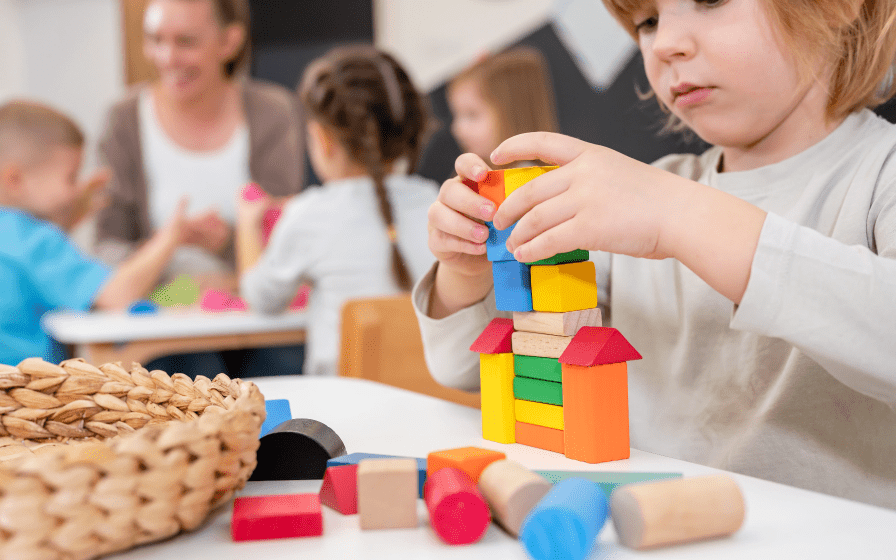
In our Kindergarten room, an educator may notice a small group of children working together to build a bridge in the construction area. The educator does not step in with instructions or solutions. Instead, they observe the process and look for opportunities to extend thinking.
By asking questions such as how many blocks are needed to span the gap or what might happen if the base is wider, the educator encourages children to experiment and reflect. Through this process, children begin to explore early concepts of measurement, balance, and spatial awareness.
The play remains child-led. The learning becomes more complex and intentional.
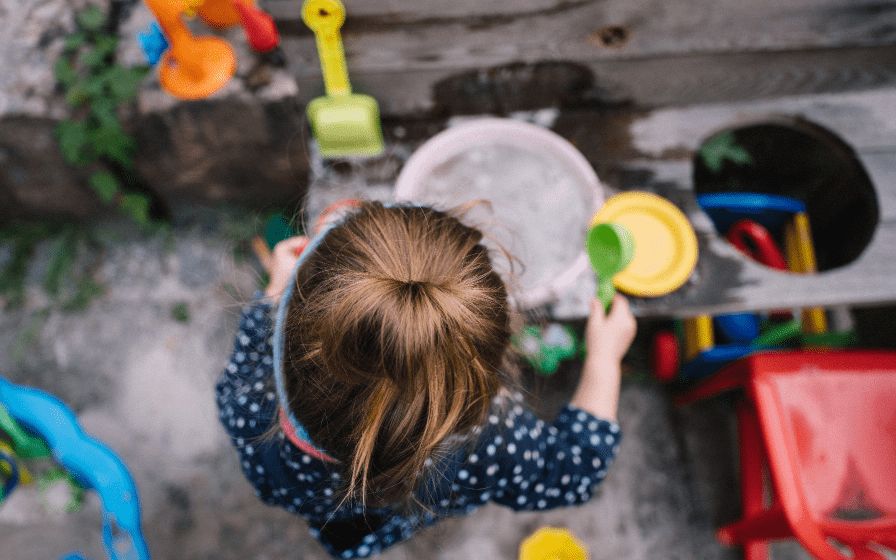
Supporting Social and Emotional Development Through Sensory Play
Outdoor sensory play provides rich opportunities for social learning. In spaces such as the mud kitchen, children naturally collaborate, negotiate, and solve problems together.
When two children want the same toy, the educator supports the moment by modelling turn-taking language and helping children communicate their needs. Rather than resolving the situation for them, the educator guides the interaction to help children reach a mutually agreed outcome.
This practice directly aligns with Outcome 1 of the EYLF. Children build a strong sense of identity and learn how to engage with others in respectful and considered ways.
How the EYLF Learning Outcomes Guide Everyday Practice
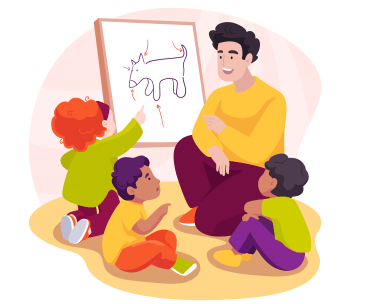
Every experience at Mount Peter Early Learning is planned and documented against the five EYLF Learning Outcomes. These outcomes provide a clear structure for curriculum planning and help ensure learning remains consistent and purposeful across all age groups.
Outcome 1 – Identity
Children develop confidence, independence, and a sense of belonging through secure relationships and supportive environments.
Outcome 2 – Connection to World
Children learn about their environment and community, and begin to understand their place within it.
Outcome 3 – Wellbeing
Daily routines, physical play, and emotional support help children feel safe, healthy, and capable.
Outcome 4 – Confident and Involved Learners
Children build persistence, curiosity, and problem-solving skills through hands-on play and guided exploration.
Outcome 5 – Effective Communicators
Children strengthen their language skills and learn how to express ideas, thoughts, and emotions in a variety of ways.
Together, these outcomes ensure learning is intentional, observable, and aligned with national expectations.
Why This Matters for Families Choosing Childcare in Cairns
Families want to understand how learning happens and how it supports their child’s development over time.
Play-based learning lays a strong foundation for school readiness by supporting communication, emotional regulation, and early thinking skills. Children learn how to work with others, manage challenges, and approach new situations with confidence.If you are exploring our Mount Peter childcare programs, this approach underpins every learning environment. For families preparing for the next stage, our Kindergarten in Cairns supports the transition to school through intentional, play-based learning aligned with EYLF 2.0.